
The Demand Signal Is There
Over 50% of SMB that use AI, report high or transformational value specifically in IT management, finance, and HR — and a large majority say they’d pay a premium for AI capabilities embedded in the business apps they already use. Workday and Sana are squarely in those high-value functions.
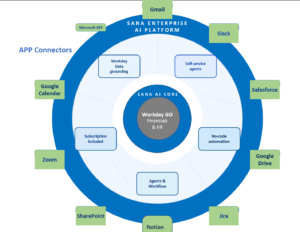
Figure 1: Workday GO with Sana AI Platform
 The Core SMB Problem Sana Solves
SMBs typically run lean — with few or no IT staff to manage integrations, no one to build agents and custom AI workflows. Their pain is exactly what Sana targets: the days of bouncing between countless apps and AI tools are over — by integrating with Workday and all a company’s apps, Sana is positioned as the only AI SMBs will need to get work done. For a 100-person company where the HR manager is also handling payroll, benefits, and compliance, that unified interface will be very valuable.
Specific SMB-Relevant Capabilities in Sana
- Self-service that actually deflects work. The Sana Self-Service Agent instantly finds and summarizes information from Workday and other knowledge sources, giving employees clear, personalized answers — and with 300+ skills across pay, time, and absence, it’s already reducing support tickets and freeing HR and finance teams to focus on higher-value work. For a small HR team drowning in “how many vacation days do I have” questions, this is immediate, significant value.
- No-code automation built for non-technical users. Sana’s four core capabilities — Find, Act, Build, and Automate — let employees set up no-code, multi-step workflows enabling agents to run work behind the scenes. An SMB owner can ask Sana to set up a monthly workflow scanning email inboxes for receipts and submitting expense reports — without an IT department or developer, savings time, automated timely submission and accuracy.
- Included in existing subscription – with a clear upgrade path. Sana for Workday (Sana core) and the Sana Self-Service Agents are available to all Workday HCM and Financials customers at no additional cost – an allocation of Flex Credits is included as part of the existing Workday subscription, For SMBs, this removes the most common objection to yet another AI tool; there’s real, immediate value before spending another dollar.
For SMBs that want to go further – using Sana as their primary employee experience and connecting it across tools like Slack, Gmail, Salesforce, and Google Drive – that requires the Sana Enterprise SKU, which does carry additional cost. For many SMBs, the Core tier alone will deliver meaningful value. But for those ready to consolidate their entire app stack under one AI interface, the Enterprise tier is the path to get there. - Connects the apps SMBs already use. Sana Enterprise extends the Sana experience beyond Workday with connectors for Gmail, Google Calendar, Google Drive, Slack, Salesforce, Jira, Notion, SharePoint, Zoom, and more. Most SMBs run on exactly this stack — so Sana can act as the connective tissue across their entire operation.
What Makes Sana More Relevant to SMBs Than a Standalone AI Tool
The critical differentiator for SMBs isn’t the AI itself — it’s the data grounding. Sana brings AI into the core systems and processes that run the business, completing HR and finance tasks using the same security model, configuration, and policies companies already rely on — so answers and actions are grounded in the right data and rules. A generic AI solutions like ChatGPT or Copilot do not have access to the SMBs business data like – doesn’t know about headcount, open reqs and recruitment policies, vacation data or payroll rules. Sana does, because it lives inside the system of record making it significantly more valuable.
Sana’s earliest deployments were at enterprise scale, but adoption is expanding rapidly across Workday’s full customer base.
Broadening the SMB activation playbook. To drive adoption, Workday is leveraging the Workday GO program to provide the training, diagnostics, and ROI tools needed to clarify business value. While early efforts focused on the smaller end of the market with partners like Three Link, the strategy has expanded to a much larger partner set focused on the Mid-market. This motion includes the Sana Self-Service and Payroll Agents as core components of the standard Workday GO packages, ensuring a more streamlined onboarding experience than traditional enterprise deployments.
Perspective
Sana AI platform is architecturally highly relevant to SMBs — the self-service capabilities, the no-code workflow builder, the inclusion in existing subscriptions, and the deep data grounding in HR and finance data are all genuine SMB strengths. The gap is go-to-market maturity: the product is there, but the SMB proof points, partner playbooks, and accessible onboarding motion are still catching up. As Workday GO activations scale across an expanded partner ecosystem, the focus has shifted toward the mid-market where the Sana and Workday value proposition is strongest. This broader delivery motion is the key to translating strategic potential into sustained SMB traction.